
Fire Protection
Hydrant valves, fire valves and isolation valves for fire water systems
Fire protection systems demand reliable isolation and hydrant equipment conforming to the installation standard specified for the site. This selection covers hydrant landing valves, fire valves and the isolation valves supplied for fire water duty. Approval to the applicable national or third-party fire scheme is confirmed against the item at quotation.
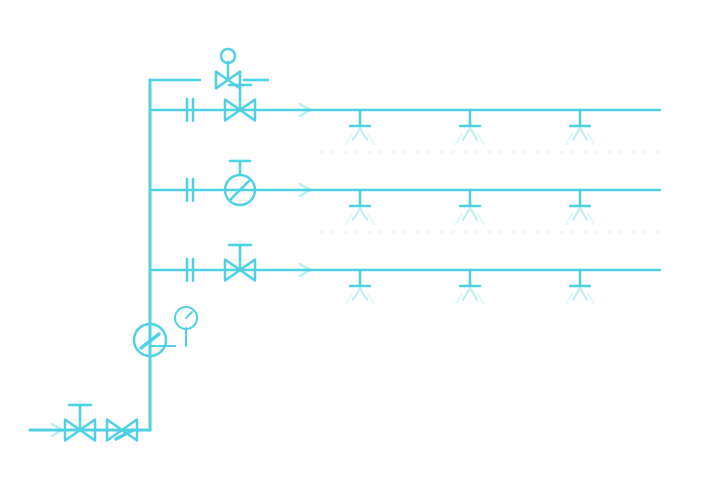
Isolation in fire suppression systems
Sprinkler and deluge systems require zone isolation valves that are normally open, tamper-evident, and capable of fast shutoff. Butterfly valves with OS&Y (outside screw and yoke) or indicator post operators are standard for above-ground installation. Gate valves with rising stems provide clear visual confirmation that the valve is open, a requirement in many system designs where an inadvertently closed valve would render a zone inoperative.
All isolation valves in life-safety systems should be supervised: either visually accessible with locking provisions, or wired to the fire alarm control panel with a tamper switch that triggers an alert if the valve is moved from its normal position.
Backflow and check valves
Check valves prevent the backflow of system water into the potable supply when fire system pressure drops. Depending on jurisdiction and backflow risk classification, a single check, double check, or reduced-pressure zone (RPZ) assembly may be required at the service entry. Non-return valves within the system prevent water from flowing backward into wet riser sections during high-draw events.
Fire hydrants
Above-ground hydrants serve both firefighting access and system testing. Pillar-type hydrants to EN 14384 are the European standard for above-ground installations; underground hydrants to EN 14339 serve road surface or below-ground installations with a standpipe connection.
Hydrant sizing and flow rate should be matched to the fire authority's specification for the site: typically DN80 or DN100 outlets, with a minimum flow rate and residual pressure defined in the fire strategy. Hydrant spacing and coverage distances are governed by national fire regulations.
Materials and coatings
Fire system valves are almost universally ductile iron GJS-500 with fusion-bonded epoxy (FBE) internal coating rated for potable water contact. External surfaces are typically signal red (RAL 3001) for immediate visual identification. Seats are EPDM for water compatibility. Bronze or stainless steel stem and trim materials are standard to prevent corrosion in systems that may stand dormant for extended periods.
Applicable standards
- Built to the applicable national and EN standards for fire water isolation and hydrant equipment. The exact standard, class and certification are confirmed against the item at quotation.
Typical pressure range: PN16 standard for sprinkler and hydrant systems; PN25 for high-rise wet riser